Psychological Facts About Human Behavior in UX Design

Understanding human behavior is essential in UX design, as it allows designers to create interfaces that are intuitive and user-friendly. Psychological principles, such as the way people perceive information, make decisions, and interact with digital environments, play a crucial role in shaping user experiences. Cognitive biases, such as the tendency to prefer familiar patterns or the influence of first impressions, can significantly impact how users navigate and engage with a website or application.
What is the ultimate goal of our designs? For whom do we design?
Our designs are for HUMANS, aiming to address their problems and ultimately make their lives easier.
Hence, comprehending human thought processes, behaviors, and decision-making is the fundamental design principle.
Here I will address some fundamental psychological principles related to human behavior :
Attention Economy
Digital products are crafted to captivate and maintain our attention, frequently leading to a significant expenditure of our time and focus. This phenomenon is often termed the "attention economy." For instance, features like infinite scrolling on social media platforms can keep users endlessly browsing content, push notifications from apps can constantly draw users back in, and autoplay on video streaming services can lead to prolonged viewing sessions, often beyond what users originally planned. These design strategies are intentionally implemented to maximize user engagement, sometimes to the detriment of productivity and mindfulness.

Fear of Missing Out
The Fear of Missing Out (FOMO) is a psychological phenomenon where people feel anxious about missing out on rewarding experiences that others are having. Amplified by social media, FOMO drives users to constantly check updates and notifications. Features like real-time updates and ephemeral content are designed to tap into this fear, increasing user engagement. While effective for keeping users active, FOMO can impact real-world interactions and mental well-being.

The Influence of Google on Memory
The ease of accessing information online can impact our memory and navigation skills. Known as the “Google effect” or digital amnesia, this phenomenon shows how the internet serves as an external memory, reducing our ability to recall information. Likewise, dependence on GPS can weaken our spatial navigation skills.

Navigating Information Overload
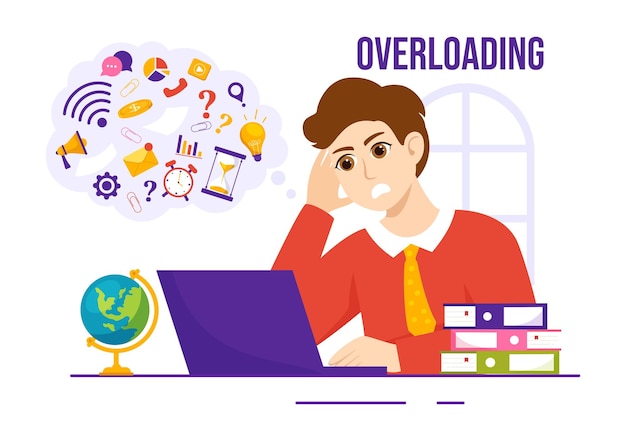
The sheer volume of information available at our fingertips can result in information overload, complicating our ability to sift through, prioritize, and retain crucial details. This phenomenon can impede decision-making and elevate stress levels. For example, when users are presented with a multitude of choices and extensive reviews on an online shopping platform, they may become overwhelmed by the options, struggle to make a confident decision, and experience heightened anxiety and frustration. This excessive influx of data can hinder effective decision-making and contribute to overall stress.
The Dynamics of Dopamine Feedback
Social media platforms, video games, and email notifications are designed to create dopamine-driven feedback loops. When users receive likes, comments, or other forms of positive reinforcement, it triggers the release of dopamine, a neurotransmitter associated with pleasure and reward. This pleasure reinforces the behavior, encouraging users to return frequently to experience that feeling again. As a result, users may find themselves constantly checking their devices to maintain that pleasurable state, which can lead to compulsive and potentially addictive behaviors. This cycle can significantly impact daily routines and productivity, as the constant pursuit of dopamine-driven rewards diverts attention and focus from more meaningful tasks. Understanding this dynamic is crucial for designing digital experiences that balance engagement with user well-being.

Human Recall Negative Experience more than Positive ones
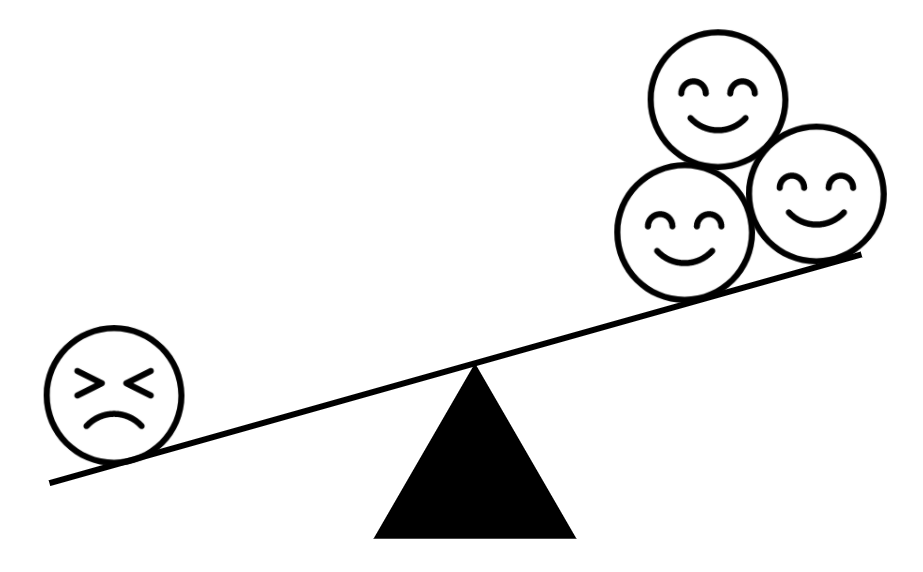
Humans have a tendency to remember negative experiences more vividly than positive ones, a phenomenon known as negativity bias. This psychological trait is rooted in evolutionary survival mechanisms, where remembering and learning from adverse events was crucial for avoiding future dangers. As a result, negative experiences often stand out more and linger longer in our memories compared to positive events, which may be lasting for a very short time. For instance, receiving a critical comment on social media can overshadow numerous positive interactions, influencing how users perceive their overall experience. This bias can affect user experience design, as negative feedback and errors may be disproportionately impactful compared to positive elements, requiring careful consideration to ensure that users’ interactions are balanced and constructive.
Human makes Mistakes
Understanding that humans are prone to making mistakes is crucial in UX design, as it highlights the need for creating forgiving and intuitive interfaces. Mistakes, whether due to user error or system confusion, are an inherent part of human behavior. For example, users might accidentally delete important information or navigate to unintended sections of a website. To accommodate this, effective UX design should incorporate features such as undo options, clear error messages, and intuitive navigation pathways. By designing with these considerations in mind, we can mitigate the impact of mistakes and enhance user satisfaction. Recognizing that errors are natural and anticipating them in the design process ensures that users can recover smoothly and maintain a positive interaction with the product.

Conclusion
Incorporating an understanding of human behavior into UX design is essential for creating effective and empathetic digital experiences. Recognizing the impact of psychological factors such as information overload, dopamine-driven feedback loops, and the natural tendency to recall negative experiences allows designers to build more intuitive, supportive, and user-friendly interfaces. Designing with the awareness that users make mistakes and are influenced by their psychological biases enables the creation of systems that are not only functional but also resilient and forgiving. By addressing these psychological nuances, designers can enhance user satisfaction, improve usability, and foster a more positive interaction between users and digital products. Ultimately, a deep understanding of human behavior leads to better design solutions that cater to real-world needs and experiences.
Happy Designing 👨💻


